Fire Damage Roof Repair Tampa Commercial
Commercial fire damage roof repair in Tampa - thermal damage assessment, membrane combustion evaluation, insulation replacement, deck integrity testing, fire-rated assembly restoration, and insurance documentation for Hillsborough County commercial properties.
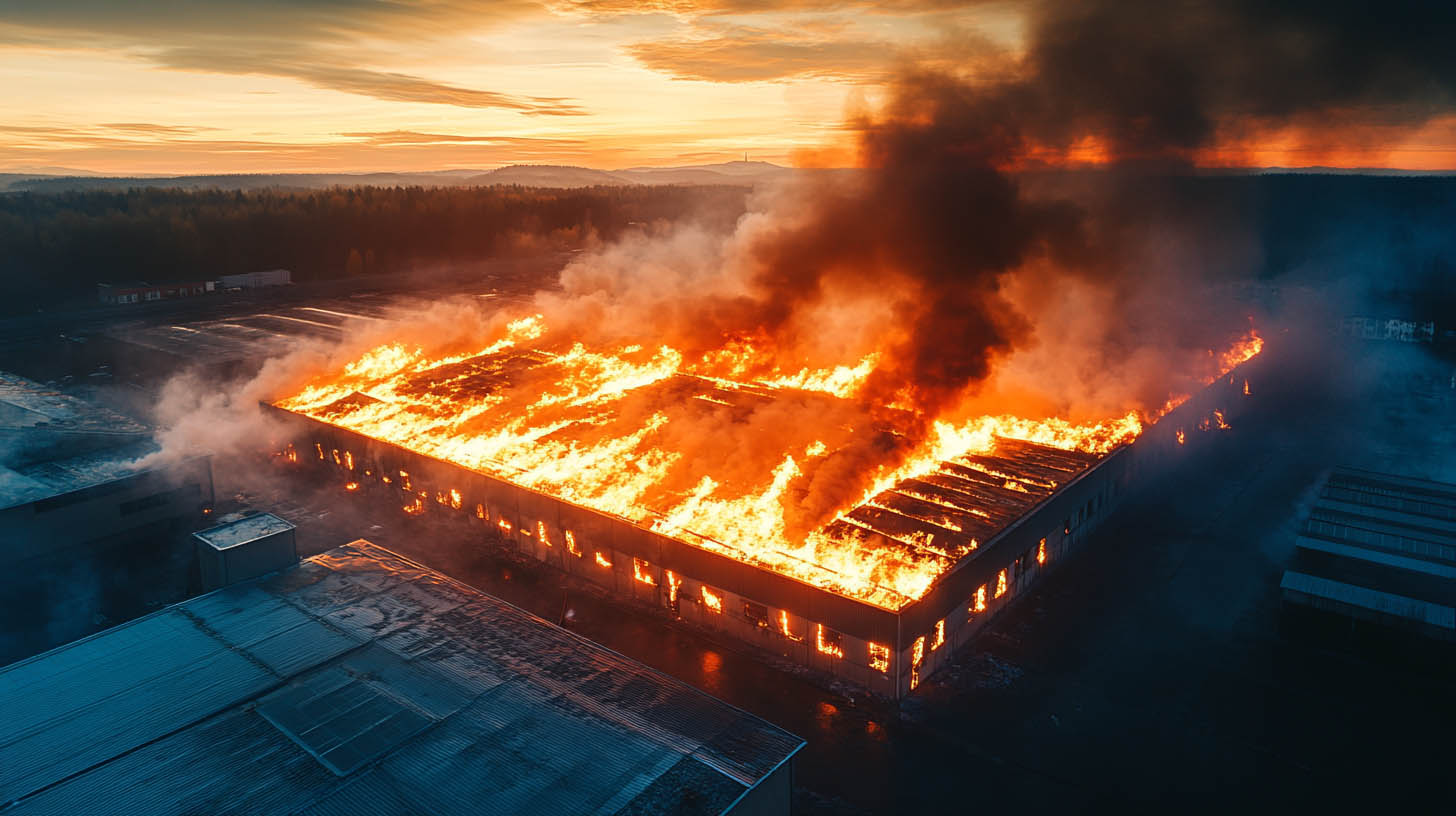
Fire damage on a commercial roof in Tampa creates both an immediate weather-exposure problem - the building is open to Tampa Bay's summer thunderstorm season within hours of the event - and a longer-term assessment problem, because heat damage to membrane, insulation, and deck extends well beyond the visible char zone. We address both simultaneously.
A commercial roof fire in Tampa puts the building at weather risk immediately. Tampa Bay's afternoon thunderstorm season means a building with a fire-damaged roof that is not dry-in-ed within 24 hours of the fire may receive two to four inches of rainfall through the open or damaged roof before a repair crew arrives. The emergency dry-in - temporary protection that stops weather from entering the building through the fire-affected area - is the first priority after the fire department clears the building for access.
Fire damage assessment on a commercial flat roof is more complex than it appears at first inspection. The visible char and burn pattern is only the starting point. Thermoplastic membrane - TPO and PVC - melts and retracts away from the heat source rather than charring in place, creating a larger open area than the fire footprint suggests. Modified bitumen and BUR systems char at the surface but may show heat-induced softening and deformation in the surrounding non-charred area that compromises the membrane integrity without visible damage. The insulation below a fire-damaged membrane absorbs heat and may be melted, compressed, or structurally compromised in a zone that extends beyond the visible membrane damage.
The steel deck below the insulation and membrane is the most critical structural concern in a fire-damaged commercial roof. Steel deck loses structural capacity at elevated temperatures - the standard flat-plate steel deck in commercial construction loses approximately 50 percent of its yield strength at temperatures above 750°F, and more than 90 percent above 1200°F. A fire of sufficient intensity and duration can reduce the structural capacity of the deck below the repair area to a level that requires deck replacement before the new roofing assembly can be installed. Deck assessment after a commercial roof fire is not optional.
Emergency Dry-In After Commercial Roof Fire
We deploy emergency dry-in crews to fire-affected Tampa commercial roofs within four to eight hours of fire department clearance for roof access. The dry-in scope is limited to stopping weather from entering the building - it is not a permanent repair and is not intended to restore the roof assembly's performance. Typical dry-in for a commercial roof fire involves: plywood deck cover over the open burn area, sealed with self-adhering modified bitumen sheet to provide temporary waterproofing; temporary equipment supports if HVAC units were displaced by the fire or by fire department operations on the roof; and a physical perimeter around the repair zone to prevent foot traffic into the structurally compromised area.
The dry-in installation is designed to withstand Tampa Bay's standard summer storm conditions - sustained wind to 50 mph and two-inch-per-hour rainfall - for the period between emergency dry-in and permanent repair, which is typically four to eight weeks depending on material lead time and insurance claim processing. We do not install emergency dry-in that will fail in the first summer storm after installation.
Fire department operations on the roof during firefighting create secondary damage: hose stream impact on the membrane, foot traffic through weakened burn zones, and potential deck damage from equipment placement during roof ventilation operations. We document this secondary damage separately from the primary fire damage in the assessment report, because fire department operations damage is categorized differently than fire damage in some commercial property policies.
Thermal Damage Assessment Beyond the Char Zone
The standard commercial roof fire damage assessment mistake is scoping the repair to the visible char and burn pattern. Thermoplastic membrane retracted from the heat source under the fire - that retraction opened the membrane in the perimeter of the burn zone. The heat that drove the retraction also softened and potentially damaged the membrane in a halo zone outside the visible char. We test the membrane in the surrounding zone - typically extending the assessment two to three times the visible burn radius - with physical probing and a pull test to check for heat-related softening or delamination.
Insulation in the fire zone must be replaced entirely within the char footprint. Insulation in the surrounding zone is tested for heat-related compression - polyisocyanurate and expanded polystyrene insulation boards that have been exposed to elevated temperature show visible compaction at the board surface when the membrane above is removed. We core-pull insulation in the surrounding zone and check for compression and melting at the board face. Compressed insulation does not recover its R-value and must be replaced.
The deck assessment is a separate scope item that requires a structural approach. We provide initial observations on visible deck deformation, discoloration from heat exposure, and evidence of thermal expansion stress at the deck end laps - and then recommend structural engineer review for any deck that shows any of these indicators. The engineer determines whether the deck section retains adequate structural capacity or requires replacement. This is not a roofing contractor's determination to make unilaterally.
Roof review
Get a written Tampa Bay commercial roof scope.
We document the roof condition, separate urgent repairs from capital work, and give ownership a practical path before money gets spent.