
Modified Bitumen Roofing Tampa Bay
Modified bitumen roofing for Tampa Bay commercial buildings - SBS and APP systems, Miami-Dade NOA-approved assemblies, torch-applied and cold-process installation, FBC HVHZ wind-uplift compliance.
Modified bitumen remains a proven commercial roof system for the Tampa Bay market - particularly for lower-slope and complex-detail buildings where the layered installation and field-applied flashing capability provides an advantage over single-ply systems. SBS and APP systems are available with Miami-Dade NOA approvals for FBC HVHZ coastal exposure buildings.
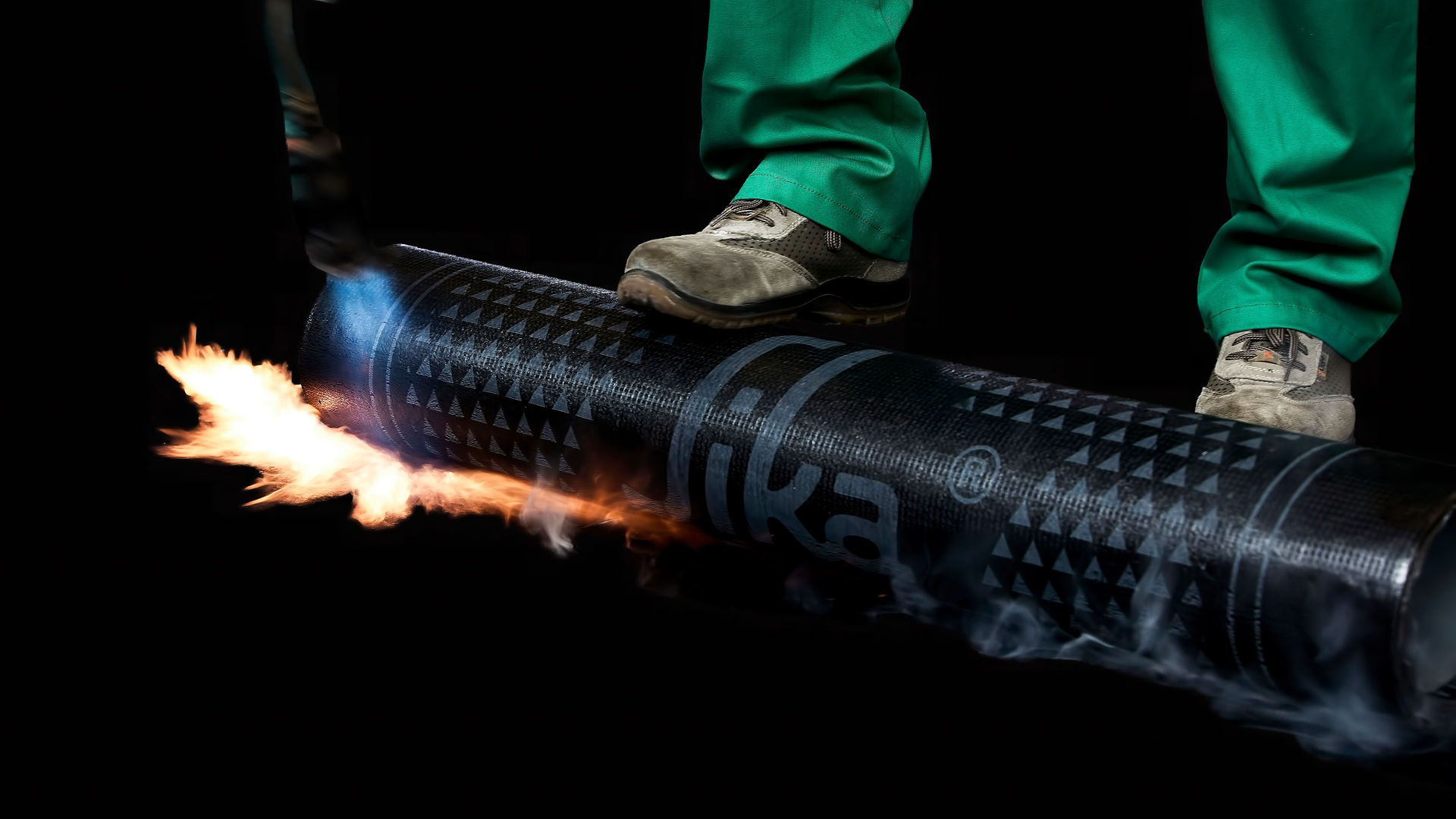
Modified bitumen systems - styrene-butadiene-styrene (SBS) and atactic polypropylene (APP) - were the dominant commercial flat-roof technology in Tampa Bay through the late 1990s and are still actively installed for buildings where the layered membrane approach and field-formed flashing capability justify the higher labor intensity compared to single-ply systems. Ybor City's historic masonry commercial buildings, the older Port Tampa Bay freight terminal facilities, and the complex-geometry roofs on Tampa General Hospital ancillary buildings are the types of projects where modified bitumen's field flexibility remains a practical advantage.
The existing modified bitumen inventory across Tampa Bay is substantial. Buildings installed in the 1985 through 2005 window are in active first or second reroof cycles. Many of these systems were installed as two-ply SBS on a glass-mat base sheet, adhered over perlite or polyiso insulation. The assessment pattern we see consistently in this vintage: alligatored surface granule loss from Tampa Bay's UV load, membrane brittleness at the flashing terminations along parapets and penetrations, and insulation saturation concentrated at the low-slope drainage collection points where the subtropical rainfall volume has driven water through minor flashing failures over multiple seasons.
For the coastal HVHZ exposure zone, Miami-Dade NOA-approved modified bitumen assemblies are available for both SBS and APP systems from major manufacturers - IKO, Soprema, GAF, Firestone, Polyglass. The NOA approval covers the base sheet, cap sheet, adhesive or torch-application method, and insulation combination. We specify the complete approved assembly for coastal buildings and document the NOA number in the project record.
SBS vs. APP for Tampa Bay's Climate
SBS-modified bitumen is the more flexible of the two systems at low temperatures - a property that matters more in northern markets than in Tampa Bay where low-temperature brittleness is rarely the failure mode. In Tampa Bay, SBS performs well and is available in cold-process adhesive application that eliminates the open flame of torch-applied systems - a consideration for buildings with occupied lower floors, for hospitals and healthcare campuses where open flame is operationally constrained, and for Ybor City historic masonry buildings where the building's insurance carrier may require cold-process application.
APP-modified bitumen is torch-applied and produces a stiffer, harder membrane that resists softening under Tampa Bay's intense solar load. The smooth-surface or mineral-granule cap sheet sheds the rapid rain events of Tampa Bay's subtropical storm pattern more effectively than a highly textured surface, and the APP cap sheet's solar reflectance in a granulated white or light gray finish contributes to cool-roof performance. For the large-footprint industrial buildings in the Pinellas Park and TIA-adjacent industrial corridors where APP has been the standard specification for decades, the system continues to perform well with documented maintenance.
The choice between SBS and APP in Tampa Bay often comes down to the installation method permitted by the building type and the owner's operational constraints rather than a performance difference in the Tampa Bay climate. Both systems, properly installed with Miami-Dade NOA-approved assemblies, achieve the wind-uplift design pressures required for HVHZ coastal buildings.
Modified Bitumen Flashing for Complex Tampa Bay Roof Geometry
The practical advantage of modified bitumen for complex-geometry roofs - irregular parapets, multiple roof levels, dense penetration fields on hospital mechanical roofs, the irregular brick parapets of Ybor City commercial buildings - is that flashing details are field-formed from the same material as the field membrane. A modified bitumen cap sheet can be cut, bent, and torch-adhered to an irregular substrate that a prefabricated single-ply flashing boot would not accommodate. This is the primary reason we still specify modified bitumen on historic and complex buildings that would require extensive custom flashing fabrication under a single-ply system.
Flashing failure is the primary leak source in the aging Tampa Bay modified bitumen inventory. The parapet wall flashing - the modified bitumen membrane lapped up the interior face of the parapet and terminated behind the coping - is under sustained thermal cycling as the parapet heats and cools daily under Tampa Bay's solar load. Over ten to fifteen years, that thermal cycling works the flashing away from the parapet wall surface at the termination point, opening a gap at the top of the flashing that allows wind-driven rain to infiltrate behind the membrane. We address this failure pattern with a new flashing application that extends higher on the parapet wall than the original detail, terminates in a reglet or behind a stainless steel termination bar rather than relying on the original embedded termination, and is sealed with an elastomeric sealant rated for sustained UV exposure.
Penetration flashings - HVAC curbs, conduit penetrations, exhaust fans - are the second most common failure point in the modified bitumen inventory. Torch-applied modified bitumen flashing around a metal HVAC curb in a direct coastal salt-air environment develops coating failure on the curb metal within eight to twelve years, and the flashing-to-curb seam is the point where saltwater infiltration begins. We specify factory-primed or stainless curb material on coastal buildings and add a secondary sealant bead at the flashing-to-curb termination on all coastal modified bitumen projects.
Roof review
Get a written Tampa Bay commercial roof scope.
We document the roof condition, separate urgent repairs from capital work, and give ownership a practical path before money gets spent.