
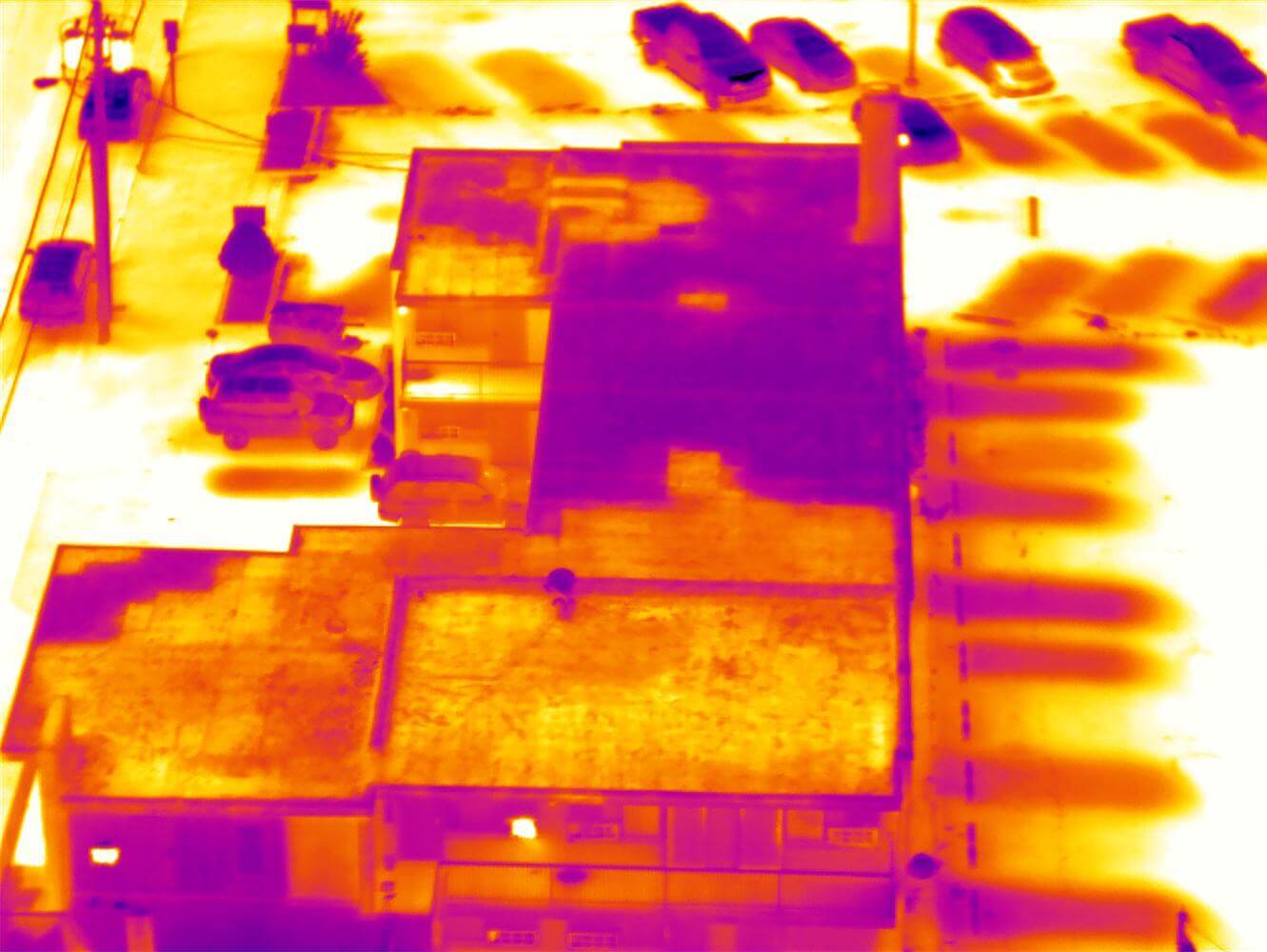
Roof Zone Mapping Tampa
Commercial roof zone mapping for Tampa Bay buildings - FBC HVHZ wind-uplift zone diagrams, field/perimeter/corner zone delineation, fastener pattern documentation, NOA assembly compliance mapping, and moisture and condition finding location reference.
Roof zone mapping in Tampa Bay is an engineering and documentation exercise, not just a drawing task. The zone diagram is the reference document that carries the FBC HVHZ fastener pattern, the NOA assembly compliance record, the moisture finding locations, the condition assessment findings, and the post-storm damage attribution. Every subsequent document references it.
A roof zone map for a Tampa Bay commercial building does more work than a roof zone map in most other markets. It is the spatial reference for the FBC HVHZ wind-uplift zone delineation - the field, perimeter, and corner zones that carry different required design pressures under Florida Building Code and Miami-Dade NOA product approval requirements. It is the base drawing that the fastener pattern compliance verification is plotted against. It is the location reference for every moisture survey finding, every condition assessment finding, and every post-storm damage attribution. And it is the document that the manufacturer's warranty representative, the insurance adjuster, and the structural engineer of record all need to read when anything about the building's roof is in question.
I produce roof zone maps as a deliverable within every inspection, moisture survey, condition report, and replacement scope I produce for Tampa Bay commercial buildings. The map is not an afterthought - it is the organizing document that makes the rest of the report intelligible. A condition finding described in words as 'perimeter zone seam cracking on the south elevation' is far less useful than the same finding plotted on a zone diagram that shows exactly where the south perimeter strip is, what the adjacent flashing detail is, and how far the cracking extends toward the corner zone.
Standalone roof zone mapping services are available for Tampa Bay buildings that need a current, accurate zone diagram but do not have an immediate inspection or replacement project driving the need. Buildings that are preparing for a property transaction, an insurance renewal, or a warranty status review benefit from having a current zone map in the documentation file before those processes begin.
FBC HVHZ Wind-Uplift Zone Delineation for Tampa Bay Buildings
Florida Building Code wind-uplift zone delineation follows ASCE 7 provisions, with HVHZ-specific parameters applied for buildings in the coastal exposure zone. The field zone covers the central area of the roof beyond the perimeter strip. The perimeter zone runs along each roof edge, with a width equal to the greater of 10 percent of the building's shorter plan dimension or 4 feet - which for a typical 200-foot-wide Westshore office building means a 20-foot-wide perimeter strip along every edge. The corner zone covers the overlap of two adjacent perimeter strips at each building corner.
For most Tampa Bay commercial buildings, the perimeter zone requires a fastener spacing two to three times denser than the field zone, and the corner zone requires spacing two to three times denser still. A building with a 12-inch field fastener spacing might require 6-inch spacing at the perimeter and 3-to-4-inch spacing at the corners - and the corner zone fastener pattern is the most commonly under-specified section of any commercial roof replacement in this market, because the corner zone area is small and the installation labor per square foot is high.
The zone diagram I produce for HVHZ compliance documentation shows the zone boundaries dimensioned against the building plan, the required fastener spacing for each zone under the selected NOA-approved assembly, and the actual installed fastener pattern at the locations where perimeter and corner pull-backs were made during the inspection. For new replacement projects, the zone diagram is the fastener pattern specification drawing - it goes to the installation crew and is the document that the inspection at perimeter closeout is checked against.
Documenting Installed Fastener Patterns for NOA Compliance
The most common NOA compliance failure in Tampa Bay commercial roofing is a fastener pattern that was designed correctly for the field zone and applied uniformly across all zones - or that was designed to the correct perimeter pattern but applied inconsistently by the installation crew, with gaps in the corner zone where crew attention was lowest. Documenting the actual installed fastener pattern requires pulling back the membrane at perimeter and corner locations and counting fasteners per linear foot at each pull-back.
The zone map records the pull-back locations by reference to the building's corner and edge labels, the fastener count at each pull-back, the required count under the NOA assembly for each zone, and the pass/fail determination. For buildings that fail the fastener pattern check at one or more pull-back locations, the zone map shows the specific locations of the under-fastened sections - which is the information needed to scope a targeted re-fastening project rather than a full replacement. Targeted re-fastening in the perimeter and corner zones of a building that otherwise has an adequate field fastener pattern is significantly less expensive than full replacement, and restores the NOA-compliant design pressure for those zones.
Post-hurricane fastener back-out assessment uses the zone map as the reference document. Fastener heads that have backed out above the membrane surface - the physical signature of a past uplift cycle - are plotted on the zone diagram by location and measured back-out height. The back-out pattern relative to the storm's wind approach direction is part of the post-storm assessment documentation that establishes whether the back-out is attributable to the storm event.
Roof review
Get a written Tampa Bay commercial roof scope.
We document the roof condition, separate urgent repairs from capital work, and give ownership a practical path before money gets spent.