
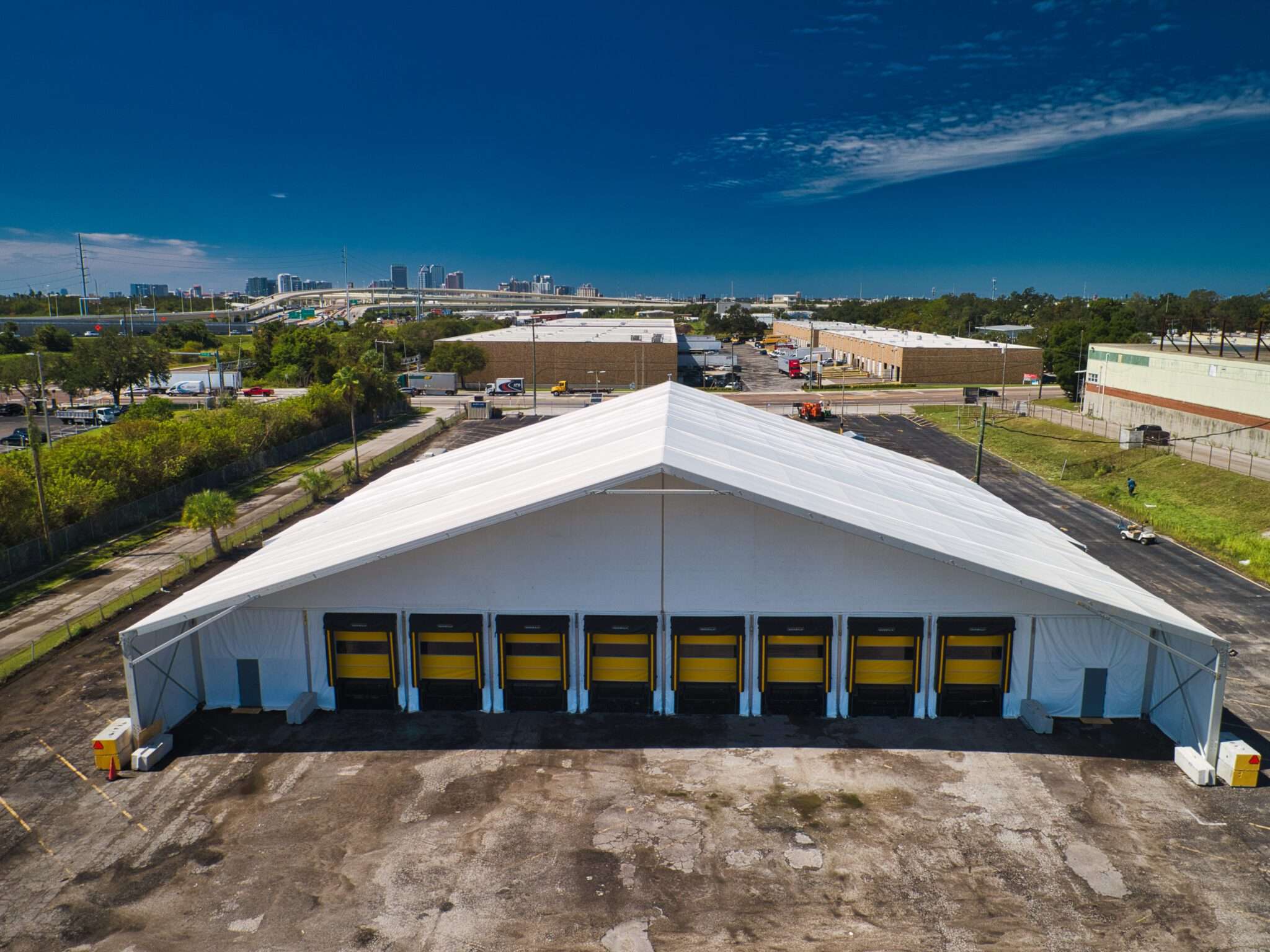
Logistics & Port Facility Roofing Tampa Bay
Commercial roofing for Tampa Bay logistics, port, and distribution facilities - Port Tampa Bay terminals, TIA cargo buildings, I-4 distribution corridor - with large-span assessment, FBC HVHZ compliance, and hurricane-season production protocols.
Port Tampa Bay is the largest port in Florida by tonnage. The distribution and logistics ring surrounding the port, TIA cargo facilities, and the I-4 corridor inland represent one of the highest concentrations of large-footprint commercial roofing in the state.
Tampa Bay's logistics real estate footprint is centered on three geographic nodes. Port Tampa Bay's Channelside terminals, Hookers Point marine terminal, and the East Port industrial ring handle the cargo volume that makes it Florida's largest port - and the buildings attached to those operations range from early-1970s concrete block warehouse structures to 2010s-era modern logistics buildings with clear heights above 32 feet. Tampa International Airport's cargo facilities on the north side of the airport complex serve the regional air freight market. And the I-4 corridor from Brandon west through Seffner and Plant City anchors the regional distribution center expansion that has made Hillsborough County one of the most active industrial real estate markets in Florida.
Large-footprint logistics buildings present different roofing challenges than commercial office or retail. Roofs above 200,000 square feet have drainage systems that must be engineered against the Tampa Bay rain-rate event - Tampa receives some of the highest short-duration rainfall intensities in the eastern United States, with afternoon thunderstorm events capable of delivering two inches in an hour. A drain system that was engineered to standard drainage calculations but not to Tampa Bay's actual rain-rate performance will surcharge during a peak thunderstorm event, adding ponding load to the deck that can exceed the design live load.
I approach logistics and port facility roofing as a structural-performance question before it is a membrane-selection question. The deck span, the purlin spacing, the original dead load and live load design, and the current condition of the deck are all inputs to the replacement specification before the membrane product is selected. On buildings over twenty years old, I pull deck inspection ports in multiple locations to document deck corrosion condition and fastener back-out before the scope is written.
Port Tampa Bay - Terminal and Industrial Ring Buildings
Port Tampa Bay's operating terminals span from the Channelside passenger terminal district to the Hookers Point petroleum terminal, the East Port container and dry bulk terminals, and the Pendola Point phosphate handling facility. The buildings associated with these operations - freight sheds, warehouse structures, transit storage, and cargo-handling support buildings - span multiple decades of construction and are under the port authority's capital maintenance program, not a standard commercial property management structure.
Roofing contractors working on Port Tampa Bay facilities must hold the port's vendor credentialing - background check clearance, port identification badge, and compliance with the port's Facility Security Plan under USCG MTSA regulations. We have managed this credentialing process for port facility projects. The scheduling constraints at active terminal buildings require coordination with terminal operations to avoid roofing crew presence during vessel loading and unloading windows, which can create non-standard production schedules that standard commercial crews are not accustomed to.
The East Port and Hookers Point buildings sit in a direct Tampa Bay salt-air and occasional spray exposure environment. Metal deck corrosion in the older buildings in this district is severe by Tampa Bay standards - we have pulled deck ports on Hookers Point buildings that showed top-flange corrosion that required structural engineer review before the roofing scope could be completed. The replacement specification for buildings in this zone defaults to stainless fasteners, lead or stainless drain bodies, and copper or stainless scupper boxes.
Tampa International Airport Cargo Facilities
TIA's cargo facilities on the north side of the airport - including the cargo apron buildings, the FedEx and UPS air freight hubs, and the USPS mail processing facility on Spruce Street - operate under the Hillsborough County Aviation Authority's contractor credentialing and security requirements. SIDA (Security Identification Display Area) badging and airfield driver certification are required for work on buildings inside the airport security perimeter. We have managed this credentialing process for TIA roofing projects.
The cargo hub buildings at TIA are predominantly 1990s and 2000s vintage construction - large-footprint low-slope roofs on steel frame with metal deck, originally covered in 45-mil to 60-mil TPO or SBS modified bitumen. Many of these buildings are approaching or past original warranty life. The TIA airside exposure creates a specific challenge: roofing materials and staging cannot be placed in locations that create a Foreign Object Debris hazard to aircraft operations. Pre-construction coordination with HCAA facilities management includes a FOD prevention plan that governs how materials are staged, how debris is contained, and how daily site cleanup is managed.
Airside building access during production is restricted to SIDA-badged personnel and vehicles. On larger TIA cargo buildings, this means the entire roofing crew must hold SIDA badges before production begins - a credentialing process that takes three to four weeks. We account for this in the pre-construction schedule.
Roof review
Get a written Tampa Bay commercial roof scope.
We document the roof condition, separate urgent repairs from capital work, and give ownership a practical path before money gets spent.