Distribution Center Roofing Tampa
Roofing for distribution and fulfillment centers across the Tampa Bay logistics network - Port Tampa Bay transload, I-4 corridor fulfillment, and Lakeland-adjacent cross-dock operations - with minimal inventory disruption and FBC wind-uplift compliance.
Tampa Bay sits at the intersection of two of the most active logistics corridors in the Southeast: Port Tampa Bay - the largest port in Florida by cargo tonnage - drives freight flow south to the port and north through the I-4 corridor toward the Central Florida and I-95 markets. The distribution and fulfillment centers that serve this flow operate 24 hours a day. A roofing contractor who does not understand 24-hour operational constraints will find out about them from a frustrated operations manager at 2 AM.
Distribution center roofing is operationally different from other commercial property types in one fundamental way: the building does not stop. A regional fulfillment center running outbound sortation for an e-commerce carrier's overnight delivery cycle does not have a weekend downtime window, a holiday closure, or a summer break. The roof replacement project has to be sequenced around a continuously operating building that cannot tolerate a rain event inside the pick-and-pack area or a delay in the outbound sort caused by roofing equipment blocking dock door access.
The Port Tampa Bay logistics ring adds the complexity of port access protocols and the most aggressive salt-air environment in the Tampa Bay market. Container-adjacent transload and distribution buildings along Channelside Drive and the Hookers Point terminal area require Tampa Port Authority contractor credentialing before any crew can access the site, and the container movement schedule - driven by vessel docking and departure windows that do not conform to a construction workday - creates staging access constraints that a roofing contractor unfamiliar with port operations will not anticipate.
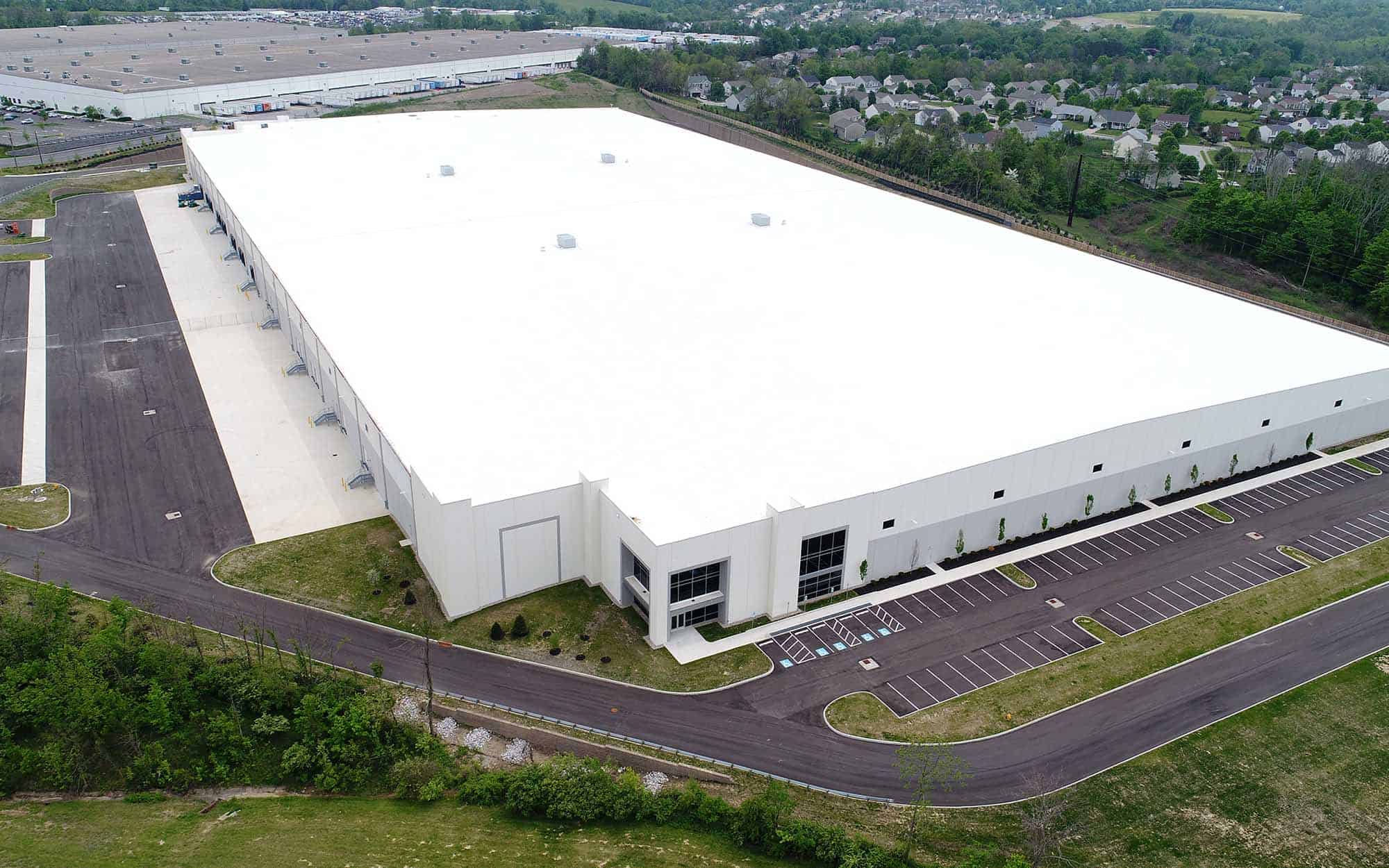
The I-4 corridor distribution inventory is the largest-footprint roofing market in the Tampa Bay extended service area. Cross-dock facilities, regional fulfillment centers, and refrigerated distribution buildings along the I-4 and SR 60 corridors between Tampa and Lakeland run average roof footprints of 300,000 to 800,000 square feet - the kind of scale where a daily tear-off and dry-in production discipline is the difference between a project completed in the production window and a project that is still open when hurricane season arrives.
Port Tampa Bay Transload and Distribution - Access and Operations Coordination
Port Tampa Bay's container operations generate freight movements that do not follow a standard commercial workday. Vessel docking windows are determined by tide, AIS traffic, and Tampa Bay Pilots Association scheduling - not by the roofing contractor's convenience. Container movements to and from the terminal can generate peak truck traffic at 3 AM or 11 PM depending on the vessel's docking schedule. A roofing project on a port-adjacent transload facility that stages materials in the truck staging lane without coordinating with the facility's dock manager will find the materials moved, not with courtesy.
Our pre-construction protocol for Port Tampa Bay distribution and transload facilities includes a meeting with the facility's dock manager and operations director to review the vessel docking schedule for the project production window and identify the container movement and truck traffic patterns that affect the staging plan. Material staging, crane positioning, and equipment access are planned around the facility's operational traffic pattern, not imposed on it. This is the kind of operational coordination that does not appear on a standard commercial roofing scope but is the difference between a successful project and a damaged customer relationship.
Tampa Port Authority contractor credentialing requirements apply to every crew member who accesses port property. Current general liability certificates naming TPA as additional insured, current workers' compensation documentation, and site orientation completion are required before access. The credentialing timeline - typically two to three weeks for a new crew - is incorporated into the pre-construction schedule so it is not on the critical path at mobilization.
I-4 Corridor Fulfillment Centers - 24-Hour Operations and Section Sequencing
E-commerce and third-party logistics fulfillment centers along the I-4 corridor run three-shift operations with the highest labor intensity in the overnight sort window. The roof replacement production plan for a 24-hour fulfillment center starts with the outbound sort schedule: the overnight sort window is the production exclusion period for work directly above the active sort area, because compressor noise and structure-borne vibration above the active conveyor systems during the sort window creates an operational complaint from the facility's operations director within hours.
Section sequencing on a large fulfillment center divides the roof plane into zones keyed to the facility's interior operational areas. We identify the highest-priority interior zones - the active pick-and-pack area, the inbound receiving docks, the outbound staging area - and sequence tear-off so those zones are never the open section at the end of a workday. The refrigerated product storage areas on cold-chain distribution buildings are sequenced last, with dry-in completion verified before cold-chain temperature monitoring confirms the product zone is protected.
Dock door access is the operational constraint that most frequently requires field coordination on distribution center roofing projects. Inbound receiving runs from early morning through mid-afternoon on most distribution centers; outbound staging from mid-afternoon through the overnight window. Crane positioning and staging access to the dock bay must be coordinated against the active dock door schedule - we designate a field coordinator whose job is to track the dock schedule and reposition equipment around dock access needs in real time.
Roof review
Get a written Tampa Bay commercial roof scope.
We document the roof condition, separate urgent repairs from capital work, and give ownership a practical path before money gets spent.