
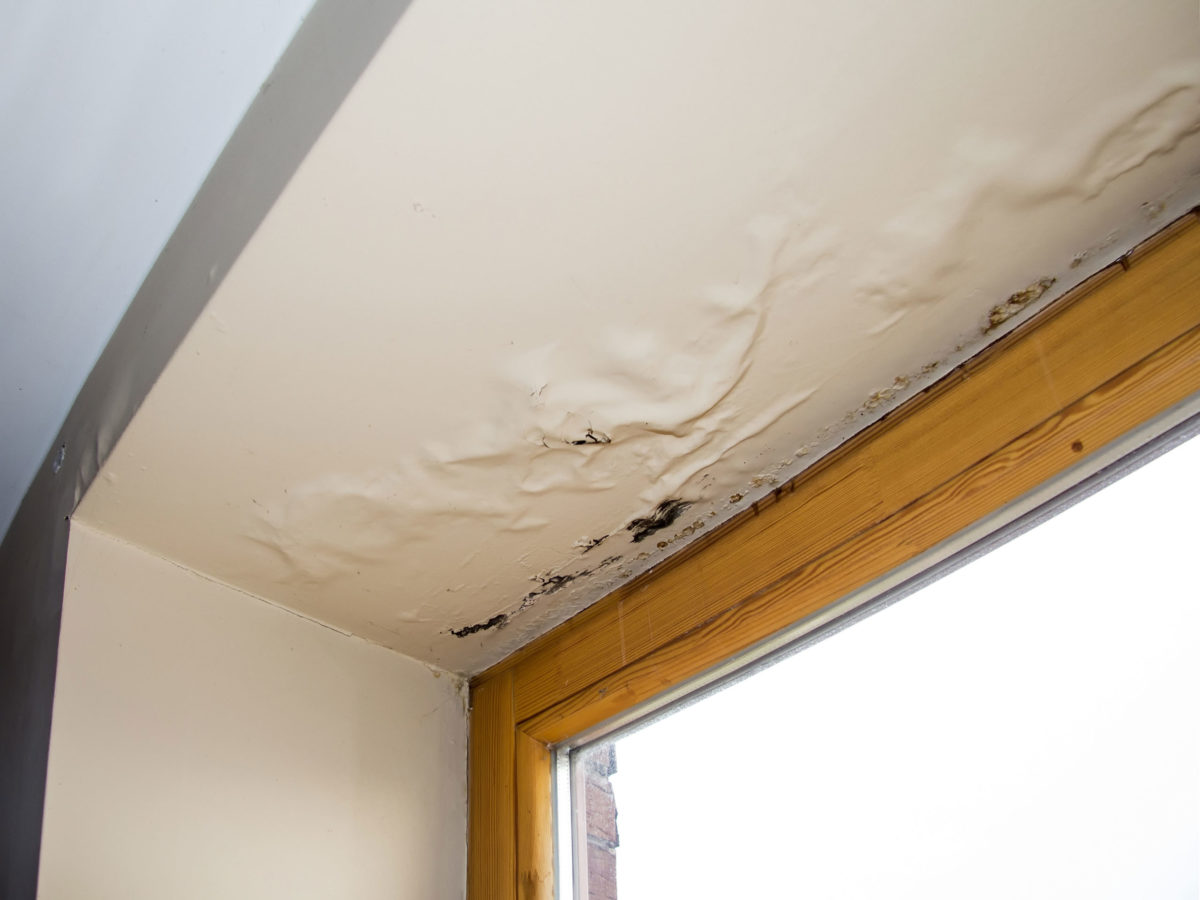
Humidity & Moisture Damage Roof Repair
Repairing humidity-driven roof failure on Tampa commercial buildings - blistering, ridging, and saturated insulation from interior moisture and failed vapor barriers, diagnosed and corrected at the source.
Most of the roof damage we get called for comes down out of the sky. This kind comes up out of the building, and it fools owners for years. A roof can shed every drop of rain and still be quietly rotting from underneath, because in Tampa the air itself does the damage a leak normally would. We see it on the cold-storage and food-processing plants off Hillsborough Avenue, on the commercial laundries and the indoor pools and natatoriums scattered around Hillsborough County, and on plenty of ordinary offices and retail boxes where the air conditioning runs hard nine months a year. The membrane never failed. The vapor barrier did - or it was never there - and the moisture in the conditioned air found its way up into the insulation.
How interior humidity destroys a roof from the inside out
Warm, humid air wants to move toward cooler, drier conditions, and in a hot-humid climate like ours that drive runs upward through the roof assembly for most of the year as conditioned interior air pushes toward the deck and the cooler outdoors above it. When that water vapor reaches a surface inside the assembly that sits below its dew point, it condenses. Drop by drop, season after season, it saturates the insulation, feeds corrosion on a steel deck, and works the membrane loose from its substrate. None of it requires a single drop of rain to get past the surface. By the time the damage is visible from on top of the roof, the wet area is almost always far larger than the one spot that finally blistered.
Blistering, ridging, and the signs that read as humidity
The symptoms are legible once you know how to read them. Blisters form when vapor pressure builds under the membrane and lifts it off the substrate into a dome - step on one and it gives like a sponge, and a run of them traces where the moisture is concentrating. Ridging, those long raised lines that telegraph up through the membrane, comes from moisture migrating into the insulation joints and the boards swelling and curling at their edges. Add soft, crushed insulation underfoot, rust weeping at the fastener heads, and edge metal lifting where the wood nailer has stayed perpetually damp, and you are looking at a humidity problem rather than a rain leak. We document every one of those signs during the assessment instead of discovering them at tear-off when it is too late to change the plan.
Finding the wet insulation before we open the roof
You cannot fix what you cannot map, and saturated insulation hides beneath a surface that still looks sound. We run infrared moisture scanning to locate it - flown or walked during the evening cool-down, when material that soaked up the day's heat reads warmer on thermal than the dry roof around it because it sheds that heat more slowly. The thermal survey outlines the wet zones; test cuts at the flagged spots confirm what the insulation, the deck, and the vapor retarder are actually doing down in the assembly. For any building in this climate that has not had a documented moisture survey in the last few years, that scan is the cheapest insurance available. Wet insulation caught while it is still in discrete patches is a repair. Wet insulation caught after it has corroded the deck is a replacement.
The vapor barrier is usually the real culprit
Here is the part that separates a real fix from a cosmetic one. In our climate the vapor retarder generally belongs low in the assembly, at or near the deck, where it stops interior moisture before it can climb up into the insulation. When a roof was built with the retarder in the wrong place, damaged during construction, or left out entirely, the assembly traps moisture instead of blocking it - and recovering over that mistake with a fresh membrane just rebuilds the trap and guarantees the same failure inside the new roof. Correcting humidity damage means correcting the vapor management, not merely swapping out the wet boards. We assess where the retarder sits relative to the moisture drive and specify the repair so the rebuilt assembly works with the building physics instead of fighting them.
Repair, recover, or replace
Where the survey shows discrete wet zones surrounded by dry, sound roof, we cut out the saturated insulation, replace it with new dry board, restore the membrane over the repair, and re-seal the flashings and edge metal in that area. Where the wet area sprawls across a large share of the roof, or where the steel deck has corroded enough to lose strength, patching is throwing good money after bad and full replacement is the honest answer - with the vapor management corrected and any compromised deck addressed in the new build. We lay the trade-offs out with the moisture map in hand, so the choice between a targeted repair and a replacement is made on evidence rather than on a hunch.
Why letting it sit gets expensive fast
Roof review
Get a written Tampa Bay commercial roof scope.
We document the roof condition, separate urgent repairs from capital work, and give ownership a practical path before money gets spent.