
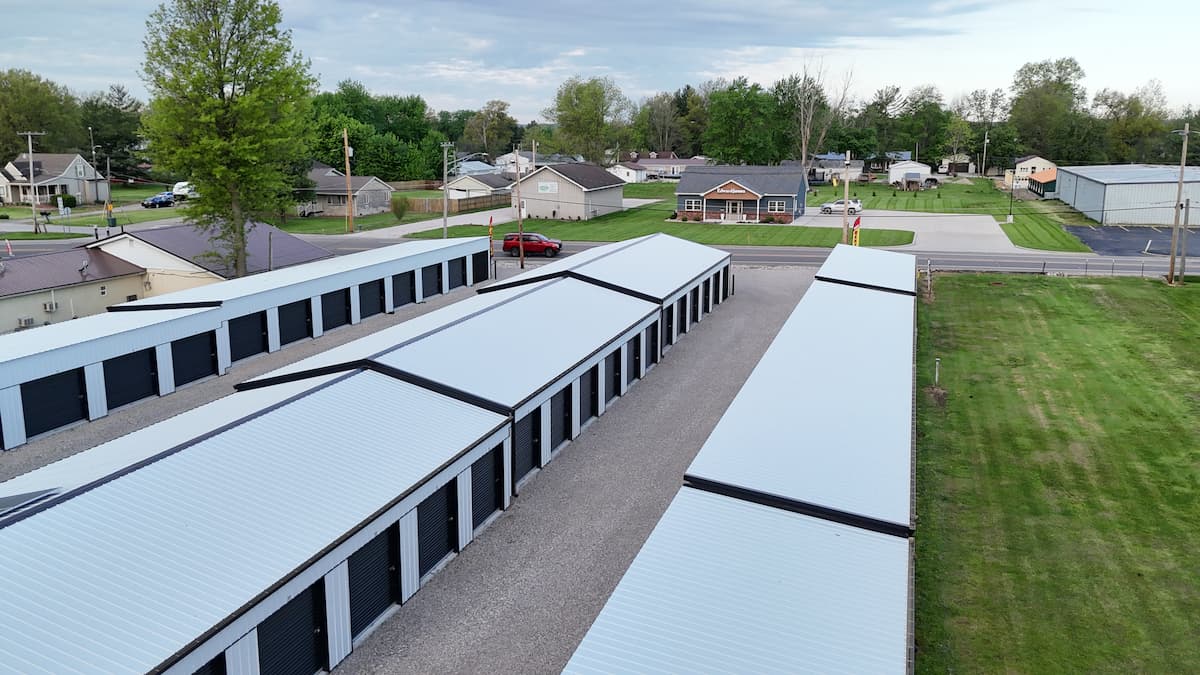
Self-Storage Facility Roofing
Commercial roofing for self-storage facilities, mini-storage buildings, and climate-controlled storage properties throughout Tampa, FL.
CubeSmart Self Storage operates multiple facilities across the Tampa Bay area, with a particularly prominent location on Dale Mabry Highway that serves one of Florida's largest and most competitive self-storage markets. Tampa's position at the head of Tampa Bay places it squarely in the crosshairs of Gulf of Mexico hurricane tracks, and the Florida Building Code requirements that govern Tampa self-storage roofing reflect the genuine storm risk that operators and their tenants face every hurricane season.
Tampa's self-storage operators carry one of the heaviest hurricane-preparedness obligations of any market in the country. The city's direct exposure to the Gulf, combined with the funnel geometry of Tampa Bay that can amplify storm surge, means that a direct major-hurricane hit on Tampa could be among the most destructive events in Florida history. For self-storage operators, the practical implication is that every component of their roofing system - not just the membrane field but the edge metal, the penetration flashings, the parapet caps, and the structural attachment of the roof to the wall - must perform under design wind loads that reflect this risk level.
Florida Building Code in Hillsborough County requires roofing systems meeting design wind speeds of 130 miles per hour or higher for standard commercial buildings, with higher values applicable in coastal exposure categories. FM-approved uplift testing standards provide the benchmark for membrane specification: FM 1-90 uplift resistance is a minimum baseline, and FM 1-105 or higher is appropriate for larger roof areas with greater potential for dynamic pressure loading. The fastener pattern, insulation attachment method, and membrane attachment to the insulation all contribute to the system's tested uplift resistance and must collectively meet the design requirement.
Hurricane-rated edge metal deserves particular emphasis on Tampa storage roofs because of the geometry of the facilities. The large, low-slope roofs of single-story and multi-story storage buildings in Tampa create wide edge perimeters where wind uplift forces are highest. Edge metal rated and installed to the same design wind speed as the membrane field ensures that the critical boundary between the roof assembly and the building's wall structure remains intact even under the differential pressures generated by a major hurricane. Pre-fabricated, tested edge assemblies from manufacturers that publish FM or ASTM test data are the correct specification basis.
Beyond hurricane preparedness, Tampa's daily summer weather pattern imposes its own demands on storage roofs. The city's famous afternoon thunderstorms, driven by sea breezes converging over the peninsula from both Tampa Bay and the Gulf, are among the most reliably intense in North America. These storms deliver two to four inches of rain in 30 to 60 minutes multiple times per week from June through September. Roof drain systems designed only for code-minimum capacity will pond water during and after these events, and ponded water on a tropical summer afternoon in Tampa - warm, stagnant, and sunlit - creates ideal conditions for algae and mosquito establishment.
White TPO membranes installed with heat-welded seams are the dominant roofing specification for Tampa self-storage projects. The reflective surface significantly reduces heat gain in buildings with climate-controlled units, directly lowering utility costs that represent a meaningful operating expense in Tampa's hot climate. The welded seams provide the joint integrity needed to resist both the prolonged moisture exposure of Tampa's wet season and the wind-driven rain that penetrates every seam gap during a tropical system.
Multi-story climate-controlled storage buildings in Tampa's urban core - Channelside, Ybor City, and South Tampa are all seeing new self-storage development - present waterproofing challenges at intermediate concrete decks. The combination of Tampa's humidity and the interior climate-control systems creates condensation dynamics at floor-to-ceiling assemblies that require careful vapor management design. Rooftop waterproofing on these urban infill buildings must also account for any planned rooftop amenity spaces, which are increasingly common on mixed-use storage developments and require traffic-rated waterproofing systems rather than standard roofing membranes.
Re-roofing large Tampa storage campuses requires planning that bridges the October-through-May dry season while respecting the June 1 hurricane season start date. The optimal scheduling approach for a large multi-building campus is to begin work in late October or November after the hurricane season closes and the convective storm season ends, completing each building sequentially through the winter and targeting project completion by May 1. This approach provides maximum weather certainty and ensures the campus is fully re-roofed and under warranty before the next hurricane season begins.
Florida's licensing requirements, maintenance documentation obligations, and insurance industry expectations for Tampa storage roofs all converge on the same recommendation: use a Florida-licensed contractor, document every inspection and repair, and maintain a roof that genuinely meets current Florida Building Code. Tampa-area insurance underwriters are increasingly sophisticated about roof age, condition, and code compliance, and a storage operator with a documented roof maintenance history is in a measurably stronger position when negotiating coverage and when filing storm claims.
Frequently asked questions
How do I know if my Tampa commercial building's BUR system needs replacement or repair?
Roof review
Get a written Tampa Bay commercial roof scope.
We document the roof condition, separate urgent repairs from capital work, and give ownership a practical path before money gets spent.