
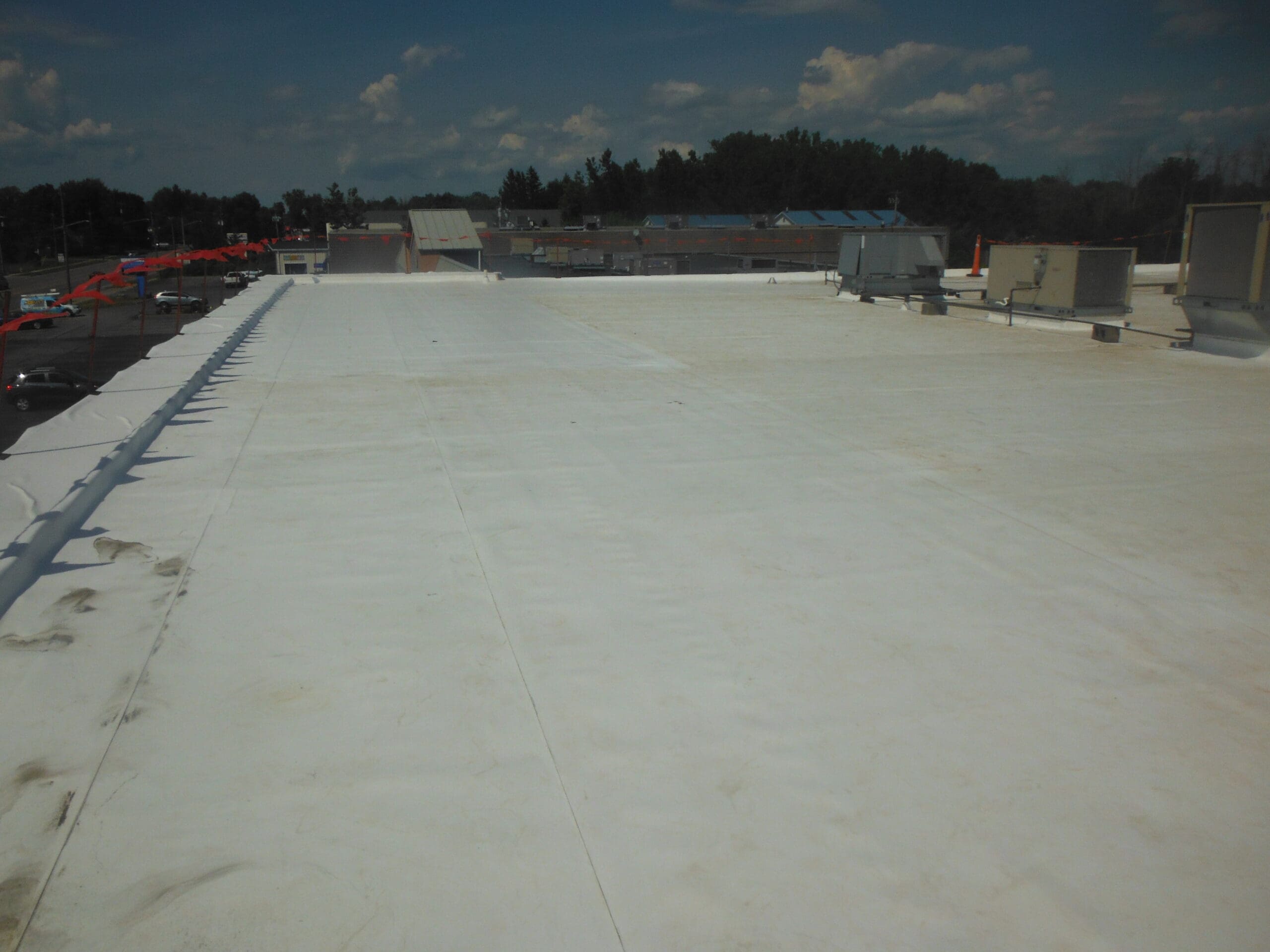
Commercial Roof Inspections Tampa
Documented commercial roof inspections across the Tampa Bay metro - condition assessment, FBC HVHZ compliance verification, Miami-Dade NOA assembly confirmation, moisture core pulls, and written reports for capital planning, insurance, and warranty support.
The deliverable is a written inspection report keyed to a roof zone diagram with photographs. The report states what is there, what the condition is, what the FBC HVHZ compliance status is, where moisture intrusion evidence is present, what the remaining service life projection is, and what the recommended action timeline is. It is written to be read by a property manager, a CFO, an insurance adjuster, or a capital planning committee - not by another roofer.
What the Tampa Bay Inspection Protocol Actually Covers
The protocol starts before we reach the roof. We review whatever documentation the building owner or property manager can provide: prior inspection reports, the installation closeout package if it exists, the current manufacturer warranty document, and any post-storm insurance claim records. For buildings that went through Milton's 2024 event or Idalia's 2023 event without a documented post-storm assessment, we note the gap in the pre-roof review and structure the inspection to fill it.
On the roof, we walk the full field in a systematic grid pattern - not just the perimeter and drain locations. Tampa Bay's subtropical humidity means slow moisture migration from chronic small failures is common, and a drain-and-perimeter-only walk misses the mid-field blister or fishmouthed seam that is the origin of the saturation we find when we pull cores. We pull moisture cores in five to ten representative locations on any roof where the history or visual evidence suggests possible saturation. Wet core findings are documented with location coordinates on the roof zone diagram and with lab-calibrated moisture meter readings.
The FBC HVHZ compliance check looks for the NOA approval number documentation in whatever form it exists on the building. If the closeout package is available and includes the NOA number, we cross-reference it against the current NOA database to confirm the listed configuration matches what is installed. If no NOA documentation is available, we document that gap and describe what would be required to produce a compliance record based on field-measurable parameters. For buildings in the coastal HVHZ exposure zone - which covers the majority of commercial buildings within a few miles of Tampa Bay or the Gulf - the absence of NOA documentation is a material issue for insurance coverage purposes.
Fastener pattern verification at perimeter and corner zones is a specific inspection line item that most generic inspection protocols omit. We pull back membrane at perimeter and corner locations in a minimum of four locations distributed around the building perimeter to count fasteners per linear foot and compare against the NOA-required pattern for the assembly type. A code-minimum field pattern applied uniformly to perimeter and corner zones - the most common fastener specification failure in this market - shows up clearly in this check. For buildings that show the tension-wrinkle signature of past uplift without complete separation, this fastener count is essential to understanding whether the building survived the last event at design limits.
Post-Hurricane Assessment - The Milton and Idalia Protocols
Hurricane Milton's 2024 Hillsborough County track and Hurricane Idalia's 2023 Big Bend landfall both produced wind and surge damage across the Tampa Bay commercial roof inventory that in many cases has not been fully documented or remediated. A visible active leak is the trigger that most building operators respond to. A perimeter zone membrane that billowed during the storm and re-adhered when the wind dropped is invisible without a deliberate inspection looking for it - and it is still at elevated risk in the next event because the fastener back-out that allowed the billowing reduces the effective design pressure of that zone.
Our post-storm assessment protocol specifically looks for: membrane tension wrinkles parallel to the parapet that indicate a past uplift cycle without full separation; fastener heads that have backed out above the membrane surface at the perimeter zone; seam stress cracking at locations that align with the storm's wind approach direction; parapet flashing separation at coping fastener locations; and drain condition after surcharge from Tampa Bay's storm-surge amplification effect on drainage systems. Each of these findings is documented in the written report with photographs and location reference on the roof zone diagram.
For insurance purposes, post-storm inspection reports need to distinguish event-related damage from pre-existing conditions. An insurer's adjuster reviewing a storm damage claim needs clear documentation of what was storm-related and what was deferred maintenance pre-existing the event - the distinction affects both the claim settlement and the ongoing coverage renewal terms. We structure our post-storm reports to make that distinction explicit, with condition chronology based on the physical evidence at each finding.
Salt-Air Corrosion Monitoring at Tampa Bay Coastal Sites
Buildings within two to three miles of Tampa Bay or the Gulf of Mexico face a salt-air corrosion environment that accelerates the oxidation of every metal component in the roof assembly - fasteners, termination bar, drain bodies, scupper boxes, edge metal, and any exposed steel structural members accessible through the roof envelope. Standard inspection protocols designed for inland markets do not include the corrosion monitoring checks that Tampa Bay coastal sites require.
Roof review
Get a written Tampa Bay commercial roof scope.
We document the roof condition, separate urgent repairs from capital work, and give ownership a practical path before money gets spent.