Salt-Air Corrosion Damage Roof Repair Tampa
Salt-air corrosion damage repair for Tampa commercial roofs - fastener oxidation, drain body replacement, termination bar failure, metal flashing restoration, and coastal-grade re-specification for Hillsborough County buildings near Tampa Bay.
Tampa Bay's salt-air environment degrades commercial roof metal components faster than any climate variable except direct Gulf beach exposure. Buildings within two to three miles of Tampa Bay shoreline - Channelside, Harbour Island, Davis Islands, Westshore waterfront, and Port Tampa Bay - experience accelerated corrosion that standard maintenance schedules do not account for.
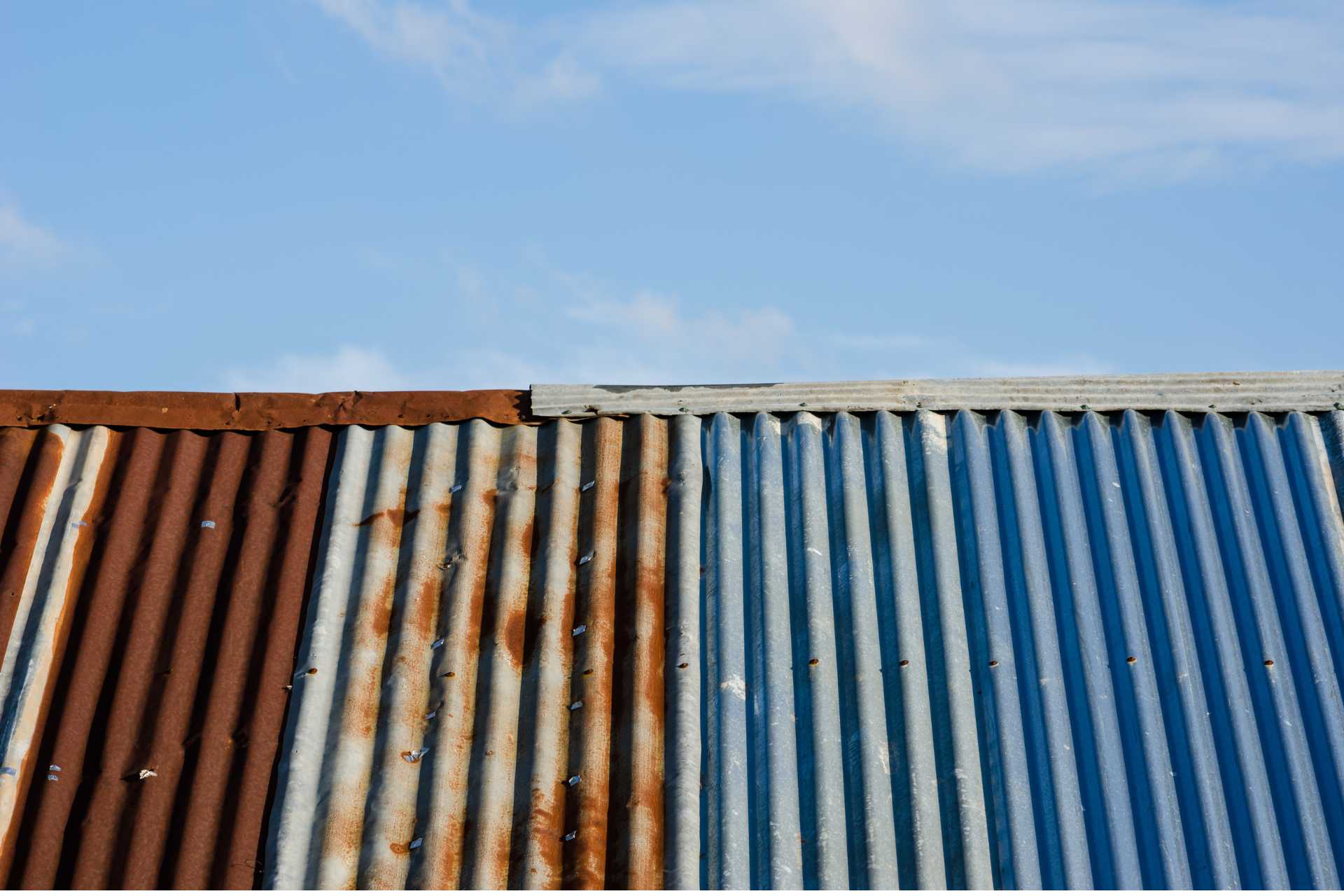
Salt-air corrosion on commercial roof components is a slow, silent damage mechanism that does not produce a roof leak until a metal component has corroded to failure. By the time a drain body corrodes through and allows water to bypass the drain seal, or a termination bar corrodes at the cut edge and pulls away from the membrane, years of corrosion progression have already occurred - progression that was largely invisible during routine visual roof inspections because the corrosion occurs on the underside of metal components, at the cut edges of termination bar, and at the contact points between dissimilar metals.
Tampa Bay's salt-air environment is driven by the onshore air flow from Tampa Bay and the Gulf of Mexico, which carries chloride-laden aerosol particles inland from the shoreline. The National Association of Corrosion Engineers classifies coastal exposure within one mile of saltwater as C5 - the most aggressive atmospheric corrosion category - and the two-to-five-mile zone as C4, which is still significantly more corrosive than the C3 rating for typical urban environments. Commercial buildings in the Channelside district, along Bayshore Boulevard, in the Davis Islands commercial node, and in the Westshore waterfront corridor are all within the C4 or C5 classification zone.
The commercial roof components most vulnerable to salt-air corrosion failure in Tampa Bay are: galvanized steel mechanical attachment fasteners at the perimeter zone; aluminum termination bar at cut edges; cast iron or standard galvanized drain bodies; galvanized sheet metal scupper boxes; and exposed steel at roof equipment supports and pipe penetration sleeves. Each of these components has a shorter service life in the coastal Tampa Bay environment than its manufacturer's rated design life, and each requires a specific coastal-grade replacement specification when it fails.
Identifying Salt-Air Corrosion Damage on Tampa Bay Commercial Roofs
Termination bar cut-edge corrosion is the most common salt-air damage finding on Tampa Bay commercial flat roofs. Standard aluminum termination bar oxidizes at the cut edge within five to seven years in the C4 coastal zone - the aluminum oxide layer that would protect the cut edge in a mild environment is undermined by chloride attack, and the bar begins to deteriorate from the edge inward. The first visible sign is a gap between the bar and the membrane at the cut edge, followed by flashing separation as the bar loses its grip on the membrane surface. By the time the flashing separation causes a detectable leak, the bar itself may need to be fully replaced.
Fastener back-out from corrosion is a separate phenomenon from wind-related fastener back-out and requires a different diagnostic approach. Corrosion-related fastener back-out occurs because the zinc coating on a galvanized fastener oxidizes and expands as it corrodes - the expanding zinc oxide pushes the fastener head upward and outward from the deck, a process that is mechanically identical to a ratcheting force on the fastener in the outward direction. The visual result is fasteners that have backed out of the membrane with a corrosion-stained washer ring visible at the membrane surface. Coastal Tampa Bay buildings with perimeter fastener back-out that cannot be attributed to a specific wind event should be evaluated for corrosion-related back-out.
Drain body corrosion failure takes two forms: oxidation of the drain bowl interior surface that allows the drain clamping ring to slip, releasing the membrane clamping seal; and through-wall corrosion of the drain body that bypasses the membrane entirely. Cast iron drains are particularly vulnerable to the second failure mode - cast iron in a subtropical salt-air environment corrodes at a rate that produces through-wall pitting at the drain body sidewall within 20 to 30 years, and Tampa Bay's commercial building inventory includes thousands of cast iron drains installed in that window.
Coastal-Grade Replacement Specifications for Tampa Bay
Stainless steel is the correct specification for termination bar on Tampa Bay coastal commercial buildings within the C4 or C5 zone. Stainless steel 316 alloy - the marine-grade alloy with molybdenum added for chloride resistance - is the appropriate specification for buildings within one mile of the waterfront. Stainless steel 304 alloy is sufficient for the C4 zone from one to three miles inland. Both alloys have a service life in the Tampa Bay coastal environment that is two to three times the service life of aluminum termination bar.
Drain body replacement on coastal Tampa Bay commercial buildings should specify either lead or cast iron drain bodies with an epoxy-coated interior, or stainless steel drain bodies for buildings in the C5 coastal zone. Lead drain bodies have a service life in the Tampa Bay coastal environment that typically exceeds the service life of the roof system above them - lead is not subject to chloride corrosion and has been the preferred drain body material for Florida coastal commercial buildings for decades. For buildings where lead is not acceptable for environmental or regulatory reasons, stainless steel 316 drain bodies are the alternative.
Fastener specification for perimeter zone re-fastening on coastal Tampa Bay buildings should use stainless steel 316 screws or hot-dipped galvanized screws with a minimum 2.0 oz/ft² zinc coating weight - the G185 designation in ASTM A653. Standard galvanized G90 fasteners have a service life in the C4 coastal zone that is insufficient for the perimeter zone re-fastening cycle on a 20-year roof system. Specifying the correct fastener grade at installation prevents a mid-cycle re-fastening requirement from corrosion-related back-out.
Roof review
Get a written Tampa Bay commercial roof scope.
We document the roof condition, separate urgent repairs from capital work, and give ownership a practical path before money gets spent.