
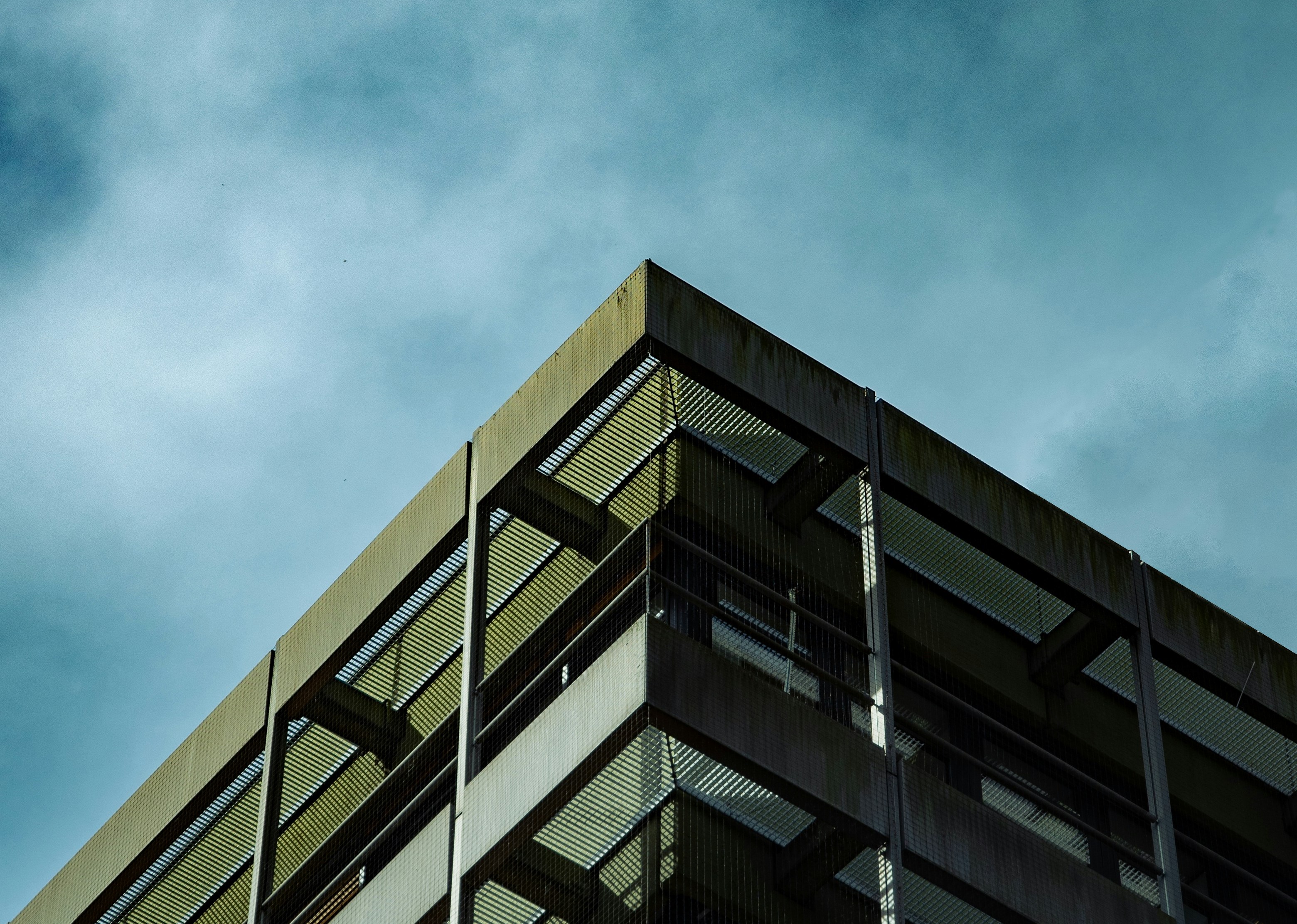
Office Building Roofing Tampa
Commercial roofing for Tampa Bay Class A and B office buildings - Bank of America Plaza, Westshore corridor towers, Carillon Pkwy St. Pete - with rooftop mechanical coordination, FBC HVHZ compliance, and minimal tenant disruption protocols.
Tampa's Class A office stock - Bank of America Plaza and the downtown Riverwalk towers, the Westshore corridor along Kennedy and North Dale Mabry, and the Carillon Parkway concentration across the bay in St. Pete - represents the most complex flat-roof scope in the market. Dense rooftop mechanical, occupied tenant floors below, and FBC HVHZ wind-uplift requirements make office building roofing a coordination-heavy engagement that generic commercial contractors routinely underestimate.
The Westshore business district runs from Kennedy Boulevard north to Hillsborough Avenue along the North Dale Mabry corridor and east to the Veterans Expressway - the highest concentration of Class A and B office product in the Tampa Bay market. International Place, One Harbour Place, the Highwoods Properties portfolio buildings, and the surrounding B and C inventory represent the core of our recurring inspection and maintenance work. Most of the mid-1990s to mid-2000s Westshore office buildings are in their first reroof or first-recover cycle, and the pattern we find on pre-assessment inspections is consistent: original 45-mil or 60-mil TPO with code-minimum fastener patterns applied uniformly to all zones, no documented Miami-Dade NOA assembly specification in the closeout package, and rooftop mechanical penetrations sealed with field-cut pipe boots that have cracked at the collar seam.
Downtown Tampa's office towers - Bank of America Plaza at 101 E Kennedy, One Tampa City Center, the SunTrust Financial Centre, and the surrounding mid-rise commercial buildings in the Riverwalk office corridor - are a different scope environment. High-rise and mid-rise office towers have smaller roof footprints relative to their occupied floor count, which means rooftop mechanical density per square foot is significantly higher than a suburban office campus. HVAC curbs, cooling towers, emergency generator exhaust penetrations, telecom antennae, and elevator penthouse roofing create a penetration environment where flashing is the primary failure point, not the field membrane. Our inspection protocol for high-rise and mid-rise office towers documents every penetration individually with a photo and a written condition assessment, because the penetration flashings are where the money is.
Post-Hurricane Milton, the Westshore Class A buildings showed a consistent pattern of perimeter zone membrane stress that does not require an active leak to indicate a problem. Membrane tension wrinkles running parallel to the parapet, parapet flashing caps that have lifted and re-seated, and fastener back-out visible through the membrane surface at perimeter zone locations are the visible signatures of a wind event that stressed the assembly at the perimeter without completing a separation. Buildings showing this pattern need a fastener-pattern review and re-fastening before the next storm season, regardless of whether a leak has appeared.
Westshore Corridor - Occupied Office Buildings and Tenant Scheduling
Roofing replacement on an occupied multi-tenant office building in the Westshore corridor requires a tenant notification and disruption-mitigation protocol that is more demanding than most property types. Roofing equipment noise - compressors, buggies, and adhesive mixing - is audible through the roof deck, particularly on concrete-deck buildings where structure-borne sound transmits more efficiently than on steel-deck buildings. Adhesive odor from fully adhered membrane systems can infiltrate the HVAC return air if the rooftop equipment dampers are not sequenced correctly with the application schedule.
My pre-construction protocol for occupied Westshore office buildings includes a meeting with the property manager and the building engineer to map the HVAC system return-air damper locations on the roof plan, establish a communication protocol for tenant complaint response, and identify any tenant-specific scheduling restrictions - trading floors, law offices, and medical office tenants on upper floors have the most noise and odor sensitivity. We sequence tear-off and adhesive application away from the most sensitive tenant zones and provide the property manager with a daily production log so tenant inquiries can be answered specifically.
Westshore parking access is the other coordination factor. Most Westshore Class A buildings have structured parking that fronts the building, and crane or equipment staging in the surface lot requires coordination with parking management. We identify the staging footprint during pre-construction and provide the property manager with the staging plan to communicate to tenants before mobilization.
Bank of America Plaza and Downtown Tampa Office Towers
The downtown Tampa office towers above 10 stories present vertical logistics challenges that differ from suburban office campus work. Material delivery to the roof requires either a crane with a below-grade or surface staging area - which requires City of Tampa right-of-way permitting in the downtown core - or a vertical hoist system attached to the building structure. We specify the vertical logistics plan in the pre-construction package for every downtown high-rise project, including the right-of-way permit application timeline if a crane is required.
Bank of America Plaza at office corridor have rooftop equipment arrays - HVAC, cooling towers, telecom infrastructure - that create micro-drainage patterns that standard roof drain sizing does not adequately capture. We document the drainage pattern during the roof walk and specify supplemental or upgraded drains where the equipment layout is creating ponding that is accelerating membrane degradation at specific low points. Ponding water around cooling tower bases is a particularly common issue on downtown towers that have had rooftop equipment reconfigured without a corresponding drain redesign.
Downtown Tampa roofing projects require coordination with the City's building permit office for the roofing permit and with the right-of-way permit office if crane staging is required on the public right-of-way. The Riverwalk event calendar affects staging availability for projects along the waterfront - the Riverwalk right-of-way is heavily programmed for events from October through April, and crane staging on the Riverwalk right-of-way requires coordination with Riverwalk event scheduling. We review the Riverwalk event calendar as part of pre-construction planning for projects in the waterfront office corridor.
Roof review
Get a written Tampa Bay commercial roof scope.
We document the roof condition, separate urgent repairs from capital work, and give ownership a practical path before money gets spent.